Siena Golf Club: Summerlin's Tuscan-Styled Public Standout
At 6,843 yards from the Gold tees, Siena pairs Italianate clubhouse polish with a tactical Schmidt-Curley design that asks for precision, not brute force.
Course at a Glance
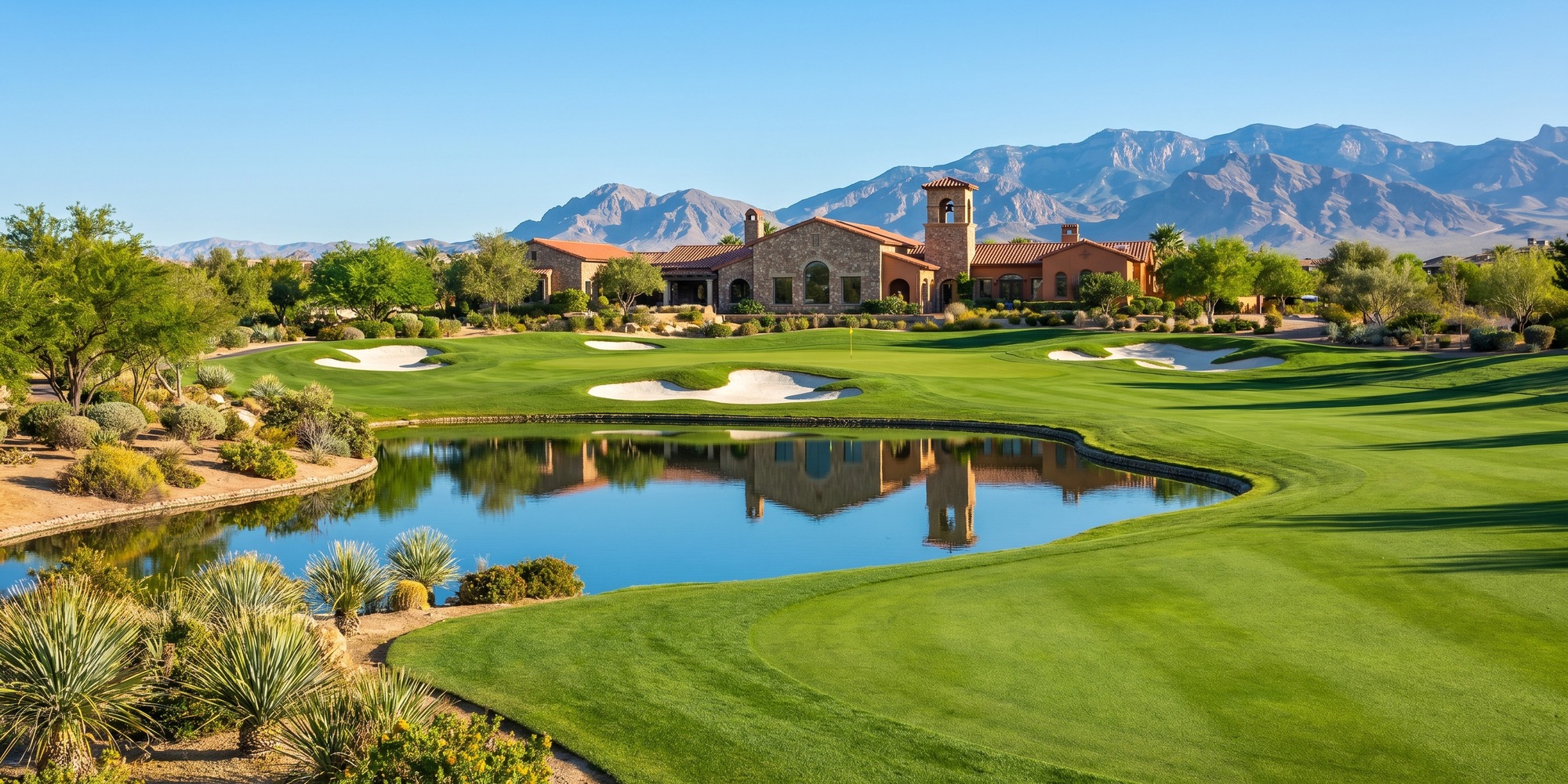
There is a particular kind of confidence to Siena Golf Club, and it reveals itself before you ever pull a headcover. The light-toned, Tuscan-inspired clubhouse, palms framing the approach, and the soft shoulder of the Spring Mountains behind the property set a high-design tone that feels more private than public. Then the card in your hand reminds you what this round really is: an 18-hole, par-72 test stretching to 6,843 yards from the Gold tees, with water and bunker placement that make every aggressive line a decision, not a default.
In a Summerlin ecosystem with major-brand names and high-profile tournament DNA, Siena quietly occupies a valuable lane. It gives serious players enough architecture to stay mentally engaged for four hours, while giving visiting groups and local regulars a setting that feels elevated from parking lot to final putt. For players who care as much about how a round feels as how it scores, that balance is Siena's real signature.
Built for strategy, not hero-ball
Opened in 2000 and designed by Brian Curley and Lee Schmidt, Siena is often described as scenic first, but that undersells the routing. The design asks for controlled trajectory and disciplined positioning across all 18 holes. According to the club's official course materials and scorecard pages, the layout combines a championship-length backbone with multiple tee options, which is exactly why mixed-ability groups tend to play well here without feeling like they are on different golf courses.
Where many desert courses in the valley reward length above all else, Siena is more nuanced. Landing zones are visible but not always generous. Angles into greens matter, especially when pins are tucked behind shaping bunkers or near water edges. Shot values are clear, but they are rarely simple. If you like the feeling of solving holes rather than overpowering them, Siena tends to age very well in your memory.
Source references: Siena Golf Club official site, official scorecard, and broader destination context from LVCVA.

Four holes that define the round
Hole 5, Par 3, 159 yards (Gold): This is the postcard and the gut-check. Water wraps the target on three sides, the putting surface has contour, and any indecision on the tee is punished. In still air it looks inviting. In wind, it is exacting.
Hole 9, Par 4, 420 yards (Gold): A demanding front-nine closer with water tracking the left edge toward the green and deep bunkering to the right. The hole asks you to commit to a shape off the tee, then control spin and launch into the approach. It is the kind of par 4 where bogey feels like a small mistake and par feels earned.
Hole 13, Par 4, 414 yards (Gold): A tactical mid-round pivot point. The preferred line favors a shaped tee shot and rewards placement over distance, with bunkers reachable enough to influence club selection. It is a classic strategy hole disguised as a straightforward number.
Hole 18, Par 4, 400 yards (Gold): The closer is pure decision architecture. Position left off the tee and the green opens. Drift right and the lake tight to the putting surface narrows the margin instantly. It is a strong finishing question for matches, member games, and corporate rounds alike.
Siena's luxury is not softness. It is clarity, beauty, and the quiet pressure of making the right shot repeatedly.
What you can expect off the card
Amenities are a major part of Siena's value proposition, especially for guests building a full-day experience. The club offers a driving range, short-game practice zones, instruction, GPS-equipped carts, a stocked pro shop, and clubhouse food-and-beverage service. Event and banquet infrastructure is also robust, which helps explain why Siena appears so often in charity calendars, group itineraries, and destination golf planning.
Green fees typically run about $100 to $275 depending on seasonality, demand windows, and booking timing. Peak visitor periods in Las Vegas naturally pull rates upward, while shoulder periods can offer strong value for players willing to tee off earlier or later in the day. First-time visitors should book directly through the official tee-time channel and target a morning slot if they want the cleanest greens and most photogenic mountain light.
If you are mapping your Summerlin golf week, Siena pairs nicely with a stronger contrast round. Players chasing another polished public championship profile can look at TPC Las Vegas. For a broader planning frame across neighborhoods and play styles, start with our Summerlin golf courses guide. And if your group values condition-centric analysis, our Palm Valley review offers a useful counterpoint in the Golf Summerlin portfolio.
Visitor's guide: booking, pace, and first-round strategy
Book through sienagolfclub.com, verify current maintenance windows, and reserve rental preferences early if you are visiting without clubs. For most players, Siena rewards one conservative adjustment on the front and one aggressive adjustment on the back: club down once when water visually tempts you into forcing a carry, then attack with confidence on the handful of holes where angle genuinely widens your scoring chance.
For first-time play, the simplest useful tip is this: choose your tee by approach-yardage comfort, not ego. Siena's architecture is most enjoyable when you are hitting full, intentional clubs into greens, not surviving long-second recoveries from compromised lies.
Find Siena Golf Club
10575 Siena Monte Ave, Las Vegas, NV 89135