TPC Las Vegas: Desert Elegance and PGA TOUR History in The Canyons
Bobby Weed and Raymond Floyd's 7,016-yard public championship course has hosted PGA TOUR pros and Summerlin golfers alike since 1996 — and the Canyon hole on number two hasn't gotten any easier.
Course at a Glance
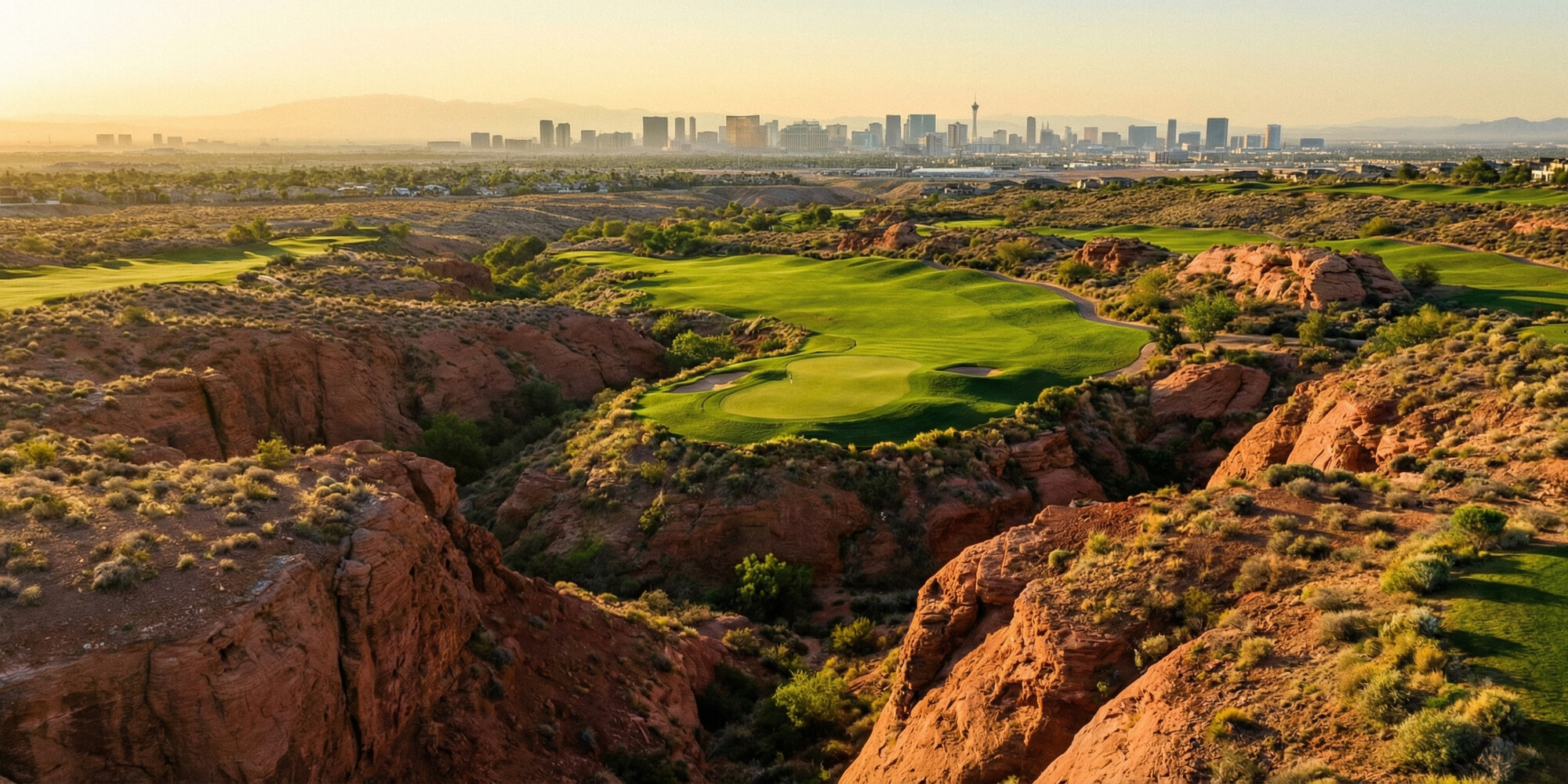
Stand on the second tee at TPC Las Vegas on a clear March morning, the Mojave desert still cool and quiet, and you'll understand immediately why this course earned the nickname "desert elegance." Below you, a natural ravine cuts through the landscape like a scar — wind-carved, red-tinged, authentically Nevada. Across it sits an island-like green, nearly 200 yards away, surrounded on three sides by desert scrub and rock. There are no bailout options. There is only the shot. Welcome to one of the finest public golf courses in the American Southwest, a place where PGA TOUR champions once battled the same hole you're about to play.
A PGA TOUR Course Built for Everyone
TPC Las Vegas — known for years as TPC at The Canyons — opened in 1996 as part of the PGA TOUR's network of TPC (Tournament Players Club) properties. The course was built with a dual mandate: host top-level professional competition and remain accessible to the public. Both goals were met with distinction. Through the 2000s, TPC Las Vegas served as a host venue for the PGA TOUR's Las Vegas stop — the event now known as the Shriners Children's Open — before the tournament settled permanently at TPC Summerlin. Those Tour seasons brought recognizable names of the era — John Daly, Jim Furyk, and more — through The Canyons village. The PGA TOUR Champions also made stops here for the Las Vegas Senior Classic during the late 1990s, with Hall of Famer Hale Irwin among the competitors who walked these fairways.
What makes TPC Las Vegas genuinely rare in the modern golf landscape is that all of that tournament DNA is fully accessible to any golfer who books a tee time. There are no membership requirements, no reciprocal access negotiations. You pay the green fee, you play the same course where Tour professionals once competed for professional careers and prize money. In Summerlin, where so many of the finest layouts are tucked behind guard gates or reserved for private members, TPC Las Vegas stands as the public option with a genuine championship pedigree.
Desert Elegance: Bobby Weed and Raymond Floyd's Design Vision
The phrase "desert elegance" isn't marketing copy — it's a precise description of what architects Bobby Weed and World Golf Hall of Famer Raymond Floyd achieved here. Weed, who would also design the original layout at TPC Summerlin, brought his characteristic precision to shaping fairways that feel entirely at home in the Nevada desert. Floyd, a four-time major champion with an intimate understanding of course management and strategic challenge, contributed a playing partner's instinct to the design: where does the skilled player gain an advantage, and where does the careless one pay dearly?
The result is a layout that uses the natural topography of The Canyons village with conviction rather than apology. Desert scrub, natural arroyos, and exposed rock aren't obstacles imposed on a manicured suburban lawn — they are the terrain itself, with fairways and greens carved into and around the landscape. The course holds Audubon Cooperative Sanctuary System certification, recognizing its commitment to environmental stewardship: native grasses buffer the playing corridors, water conservation practices minimize the course's footprint, and the surrounding desert habitat is genuinely preserved rather than simply tolerated. That ecological care is visible on every hole, where the edge between maintained turf and wild desert is deliberately abrupt — emerald against rust, lush against raw.
Golf Digest has recognized TPC Las Vegas on its national "Best Places to Play" list, an accolade that carries particular weight for a daily-fee course competing against heavily capitalized resort and private layouts for the same recognition.

The Canyon Hole and Playing TPC Las Vegas
Every course has a hole that defines its character. At TPC Las Vegas, that hole announces itself on the second tee. The par-3 "Canyon" hole stretches to approximately 200 yards from the championship tees and demands a carry that is complete and unambiguous — there is no forward shelf, no greenside bunker you can use as a backstop, no room to miss short. The green is set into a plateau surrounded on multiple sides by the natural desert ravine that gives the hole its name. In the morning desert air at elevation, with a breeze off Red Rock Canyon, distances here deceive. First-time players routinely underclub. The instruction from TPC's own course materials is blunt: your shotmaking ability is put to the test early in your round.
Beyond the Canyon hole, the championship layout stretches to 7,016 yards at par 71 from the back tees — notably a par 71 rather than the standard 72, which creates additional scoring pressure on the par-4s across the back nine. Six sets of tees, including a blended men's option that mixes blue and white tees at 6,221 yards, make the course genuinely playable across a wide range of handicaps. The Blue tees at 6,699 yards represent the primary challenge for most visiting golfers. At the white tees — 5,867 yards — the course opens up considerably, though the Canyon hole demands respect at any distance. The elevation throughout The Canyons village adds measurable carry distance to every club, a pleasant surprise for visitors arriving from sea-level markets.
Emerald turf meeting raw desert, manicured bentgrass edging against wind-carved canyon walls — TPC Las Vegas makes the case that the most beautiful golf architecture in America might be right here in the Mojave.
Throughout the round, the Las Vegas Strip is occasionally visible on the eastern horizon, a distant shimmer that feels almost surreal against the desert quiet of The Canyons village. To the west, Red Rock Canyon's sandstone escarpment provides a more elemental backdrop — and the contrast between the two views encapsulates what makes Summerlin's position in the Las Vegas metro so distinctive. You are simultaneously urban and wild, five minutes from a major freeway and on a golf course that feels genuinely remote.
Beyond the Fairways: The TPC Grille and The Canyons Village
TPC Las Vegas takes its post-round experience seriously. The TPC Grille has earned a quiet but persistent local reputation as one of the better-kept dining secrets in Las Vegas — the kind of room that serves genuinely good food to a clientele that largely consists of golfers who just finished a round and locals who know the kitchen. TPC's own materials describe it as "the Best Kept Secret in Las Vegas," which is admittedly a self-serving assessment, but the sentiment is not entirely unearned. For corporate outings, private events, and receptions, the clubhouse and grille offer a setting that combines the prestige of the TPC brand with a desert location that provides a welcome contrast to the Strip hotel event spaces that dominate Las Vegas's corporate hospitality scene.
The broader Canyons village context adds to TPC Las Vegas's appeal as a full-day destination. As Summerlin.com notes, The Canyons is one of the master-planned community's premier villages — upscale residential development, proximity to Red Rock Canyon National Conservation Area, and the sense of having positioned itself carefully between the natural world and the amenities of a major city. Combine a morning round at TPC with an afternoon hike into Red Rock's canyon trails and you have something no resort golf destination can manufacture: authentic Nevada desert terrain, accessible from a car park that also serves a TPC course.
Visitor's Guide: How to Book and What to Expect
Tee times at TPC Las Vegas book directly through the TPC Network's reservation system at tpc.com/lasvegas. TPC publishes starting rates of $119 for Nevada residents and $159 for non-residents, and prices dynamically above them, so spring season (March through May) and autumn (October through November) will command the higher end, while Las Vegas's brutal summer heat typically brings substantial discounts for those willing to tee off early. If you are visiting during peak season, booking several weeks in advance is strongly recommended, particularly for weekend mornings.
First-time visitors should strongly consider the blended tee option — it removes several of the most punishing forced carries while preserving the full strategic character of the layout. And regardless of which tees you choose, give the Canyon hole the respect it deserves: read the wind, add a club, and commit. It is a hole that will stay with you long after the scorecard is signed.
TPC Las Vegas is located in The Canyons village of Summerlin, approximately 15 minutes from the Strip and adjacent to the Red Rock Canyon corridor. For golfers building a Summerlin itinerary, it pairs naturally with a round at one of the area's other championship venues — the complete Summerlin golf courses guide covers the full landscape, from TPC Summerlin's private championship pedigree to the public access gems that define this corner of Las Vegas. See also our Siena Golf Club review for another polished public championship option in Summerlin.
Find TPC Las Vegas
9851 Canyon Run Dr, Las Vegas, NV 89144