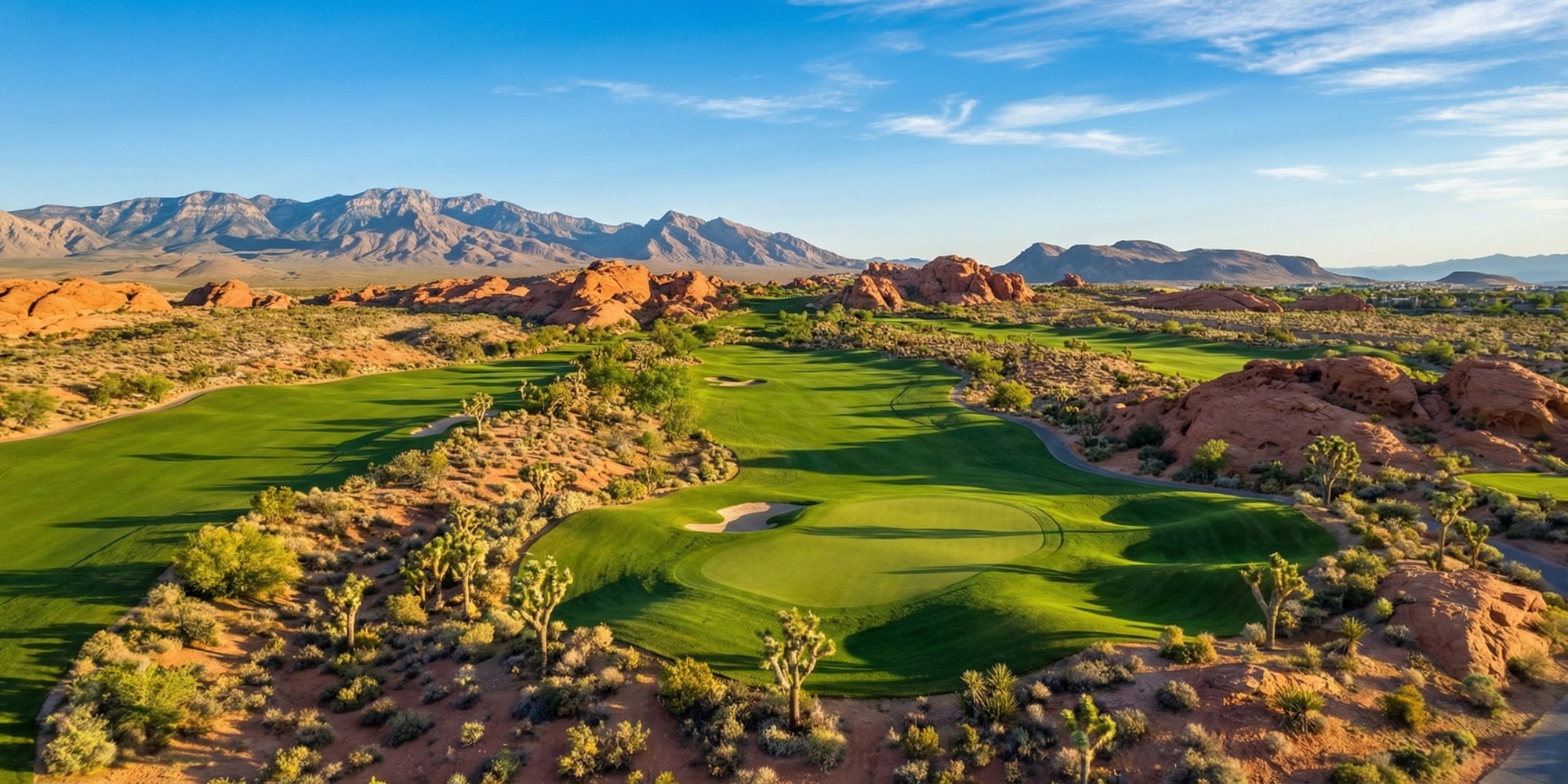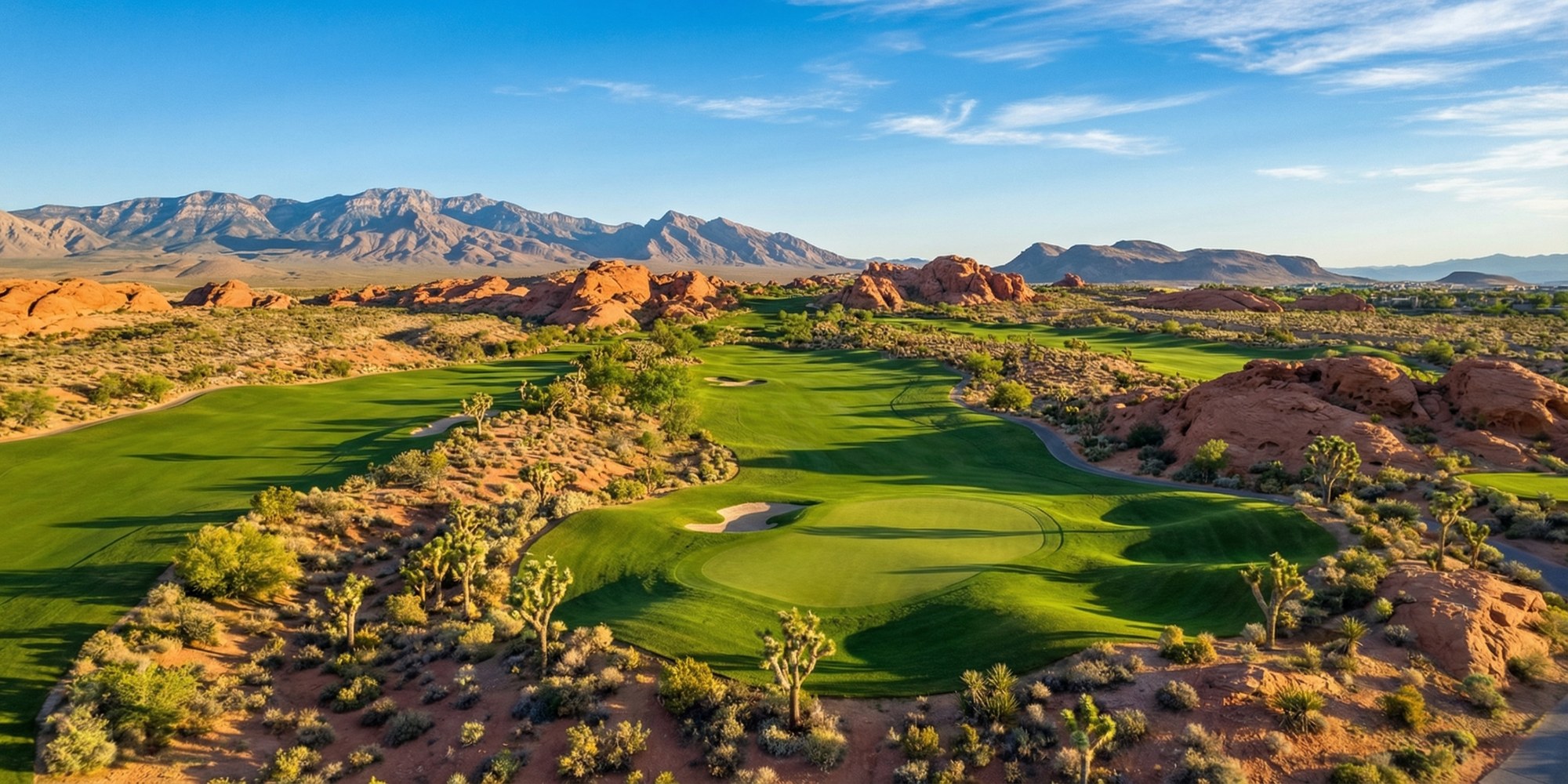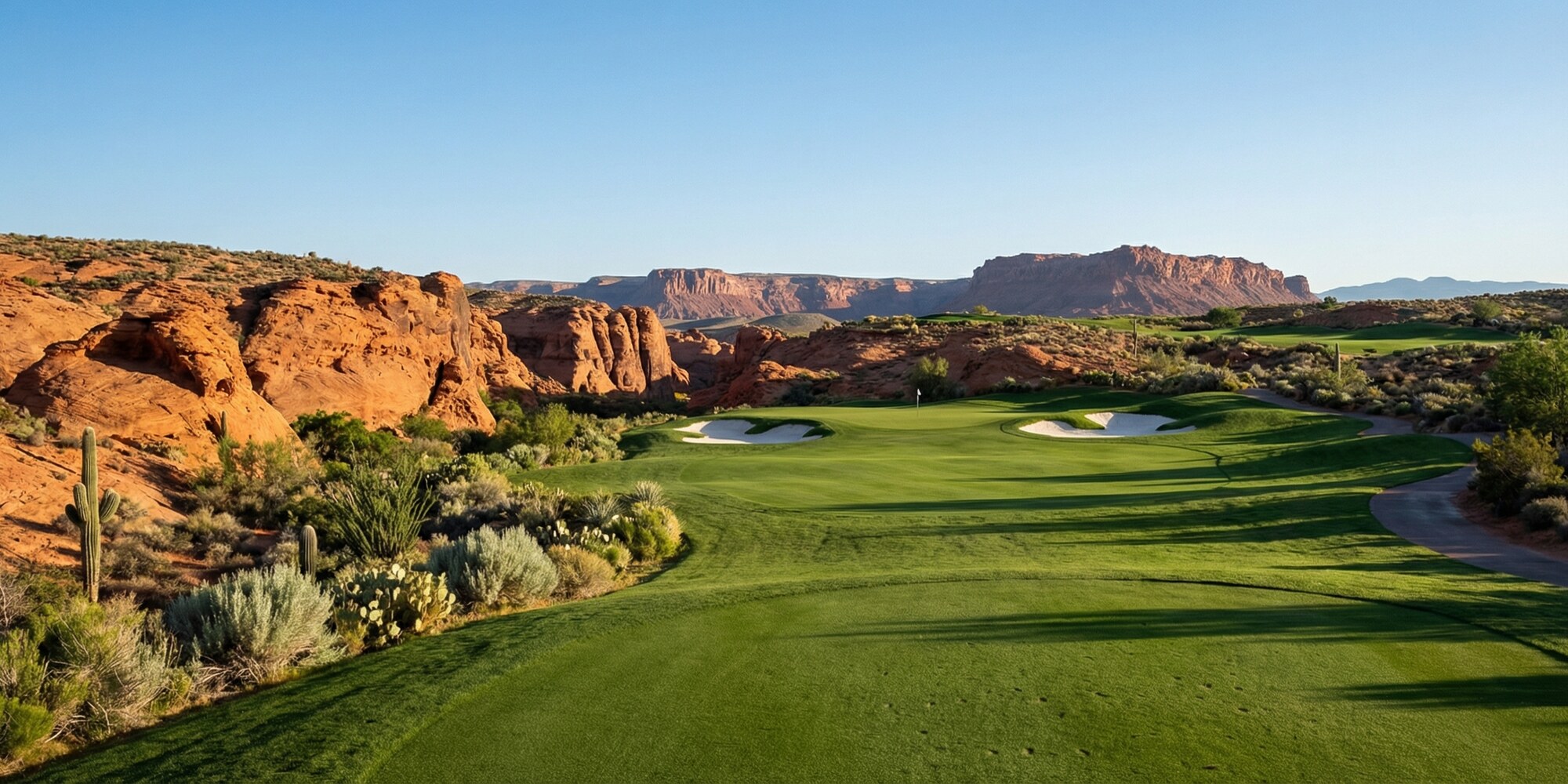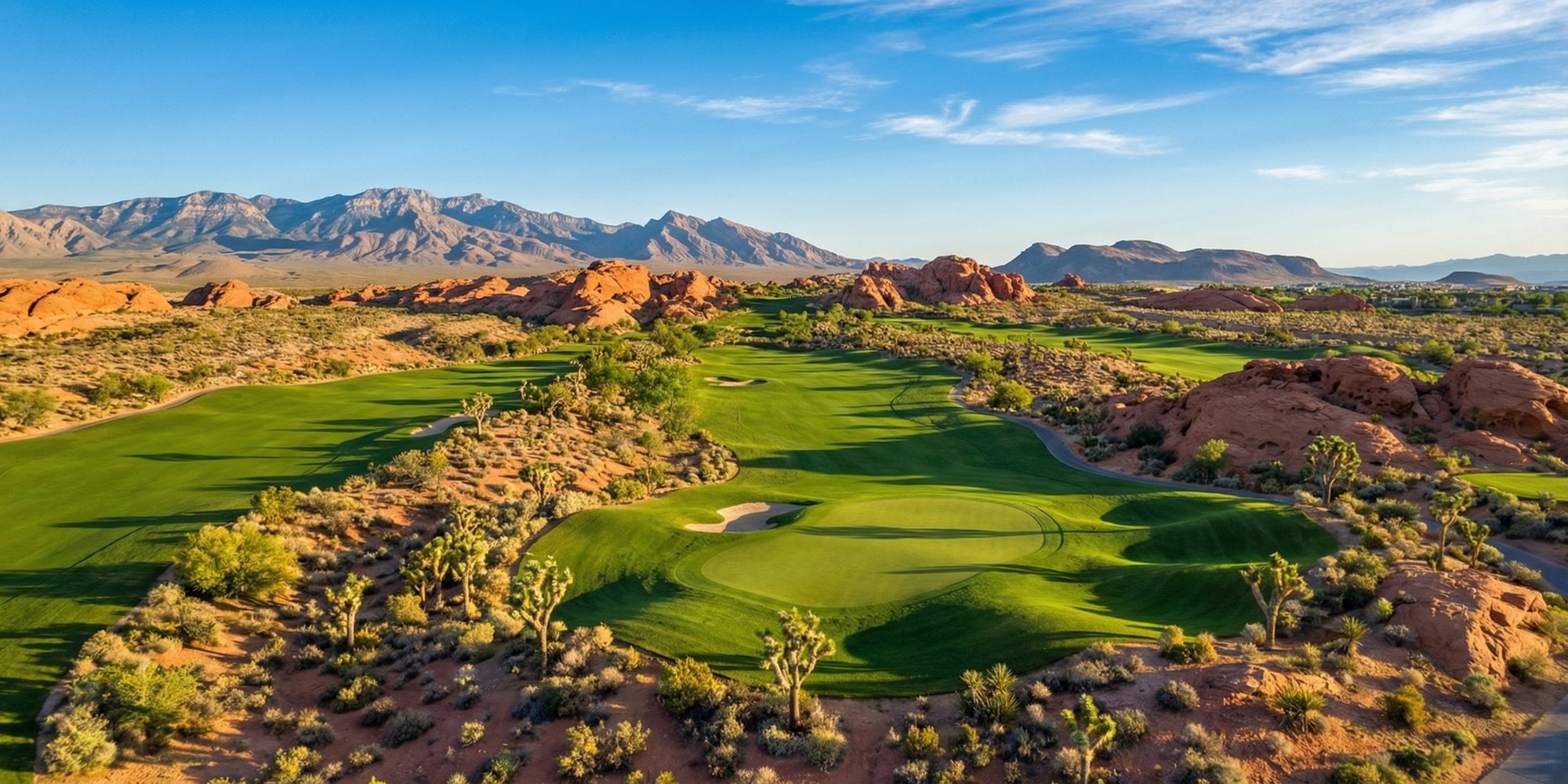
On any given morning, the 10th tee of Angel Park Golf Club's Mountain Course offers a view that stops first-timers cold: the Spring Mountains rising snow-capped beyond the desert horizon, fairway bending sharply left around a canyon drop, and the Las Vegas skyline visible as a glittering smudge to the east. It is, by most measures, the kind of vista that turns a round of golf into something closer to a pilgrimage. That it's available to the public — no membership, no private-access hurdles — is precisely what has made Angel Park one of Summerlin's most beloved institutions for more than three decades.
A Palmer Legacy, Rooted in the Desert
When Arnold Palmer and his longtime design collaborator Bob Cupp broke ground on Angel Park in the late 1980s, Summerlin was still an emerging master-planned community on Las Vegas's western edge — a vast expanse of Mojave terrain being carefully transformed into the upscale residential and recreational destination it would become. Palmer and Cupp seized the natural drama of the site: the gradual elevation shifts toward the Spring Mountains, the arroyos and canyon cuts that define the Mountain Course's character, and the more open, Bermuda-lined corridors that give the Palm Course its sunlit, fluid feel.
The club opened in 1989, making it one of Summerlin's original anchor amenities — predating many of the luxury residential communities that would eventually surround it. Its positioning along Summerlin Parkway, just off Rampart Boulevard, placed it at the heart of what would become one of the most desirable ZIP codes in the American Southwest. Unlike the private-access world of Red Rock Country Club or the tour-stop prestige of TPC Summerlin, Angel Park was conceived as an elevated public experience — a course that demanded real golf from its players without demanding a six-figure initiation fee.
The Mountain Course — Canyon Drama at Every Turn
The Mountain Course is the reason most golfers make the drive up Summerlin Parkway. Playing to 6,722 yards from the back tees at a par of 71, it is the more theatrically demanding of the two layouts — a course that uses desert terrain as architecture in the truest sense. Elevation changes of as much as 40 feet between tee and fairway are common, and Palmer's routing ensures that nearly every hole presents the player with both a visual challenge and a strategic decision.
The signature hole is the par-3 11th, playing 167 yards from the championship tees across a natural arroyo to a green guarded by bunkers on three sides. The carry is pure — there's no bailout on the left, no friendly slope to funnel errant balls toward the putting surface. The Spring Mountains frame the backdrop so perfectly that it's difficult not to pause on the tee box and simply look. Local instructors often bring students here to study the psychology of commitment: on the 11th, hesitation is punished immediately. Hit your number, hold your line, and trust the yardage. The green itself runs subtly left-to-right; putts above the hole demand respect.
Equally memorable is the par-4 3rd, a dogleg right of 412 yards that rewards a precise tee shot along the left edge of the fairway, opening an approach to a green that appears to float above a desert wash below. Miss right off the tee and the canyon collects your ball with cheerful indifference. The Mountain Course's rough, when grown out to seasonal heights of two to three inches, catches anything marginally off-line and adds genuine scoring difficulty to what might otherwise play as a straightforward layout.
The Palm Course — Desert Precision on Flatter Ground
Where the Mountain Course trades in drama, the Palm Course deals in precision. At 6,530 yards from the back tees and playing to a par of 70, it is the more scoring-friendly of the two — but that reputation obscures a course that punishes anything other than straight, committed shot-making. The Palm runs through flatter Mojave terrain, and its wider fairway corridors invite aggressive play off the tee. The problem is the greens: Palmer and Cupp designed the putting surfaces here with pronounced undulation and subtle false fronts that kick the uninitiated back into greenside bunkers with quiet efficiency.
The Palm is the preferred morning round for Summerlin residents who want 18 holes before noon — it walks faster than the Mountain, the elevation changes are gentle enough for comfortable cart-free play in cooler months, and its open sightlines make it a reliable choice for corporate outings and group rounds where pace of play matters. That said, it is emphatically not a beginner's course: the par-3s are unforgiving, and the back nine tightens considerably as desert scrub encroaches on the landing zones.
Angel Park is where Summerlin learned to play golf — and three decades later, it remains the course most locals point to when someone asks where to go first.
Cloud Nine — The World's Par-3 Holes, Brought to the Desert
No profile of Angel Park would be complete without serious attention to Cloud Nine, the club's 12-hole par-3 course that stands among the most conceptually inventive amenities in Las Vegas golf. Designed as a collection of replica par-3 holes drawn from legendary courses around the world — including tributes to famous holes from Augusta National, Pebble Beach, and Royal Troon — Cloud Nine is simultaneously a teaching tool, a warm-up facility, and its own complete golfing experience.
Holes play from approximately 60 to 130 yards, making the course appropriate for players at every skill level, but the replica design philosophy gives it a depth that pure beginners and low-handicappers alike find engaging. Playing the Postage Stamp replica at hole 8 — based on Royal Troon's famous 8th, famous for its impossibly narrow green defended by deep pot bunkers — is a different kind of experience when you can see the Las Vegas Strip shimmering in the distance beyond the desert scrub. Cloud Nine is also lit for evening play during warmer months, making it a genuine social amenity for Summerlin's golf community after the desert heat breaks.
Amenities, Practice Facilities, and the Full Angel Park Experience
Angel Park's practice facility is one of the most complete public golf training environments in Southern Nevada. The driving range stretches to 300 yards with multiple target greens and features both artificial and natural turf hitting bays. A short game area with dedicated chipping greens, a practice bunker, and a large putting green allow players to prepare specifically for the conditions they'll encounter on either course. The Southern Nevada Golf Association (SNGA) recognizes Angel Park as a significant contributor to junior golf development in the Las Vegas valley — the club's instruction programs have introduced countless Summerlin youth to the game.
The clubhouse, while appropriately scaled for a public facility, offers a well-stocked pro shop with on-course apparel, equipment, and the obligatory Angel Park logo merchandise that local regulars accumulate over years of Sunday morning rounds. The grill opens early enough to accommodate sunrise tee times with coffee and breakfast sandwiches, and the post-round lunch menu leans toward classic comfort food rather than the ambitious cuisine you'd find at a private club. That's not a criticism — it's appropriate to Angel Park's identity as a democratic institution in a town that takes its luxury seriously.
Visitor's Guide — How to Book and When to Come
Angel Park's tee times are available online at angelparkgolf.com, with advance booking opening 30 days out for public players and 60 days for rewards members. Green fees range from approximately $55 in summer twilight slots to $160 for peak morning rounds on the Mountain Course during the prime October–April season. The best value window for visitors is the late November through early January shoulder period, when temperatures remain ideal and rates sit in the $75–$110 range depending on tee time. Early booking is essential on weekends — the Mountain Course in particular fills by Wednesday for Saturday morning slots during peak season.
First-time visitors: play the Mountain Course first. Arrive 30 minutes early to work through the short game area and find your tempo before the round. The 11th hole will test your nerve, but it's the memory you'll carry home. Those with limited time or a preference for a quicker round should book the Palm Course and consider finishing with nine holes on Cloud Nine at dusk — a distinctly Summerlin way to end the day. For the full exploration of Summerlin's golf course landscape, Angel Park belongs at the top of any visitor's itinerary.