The Best Time of Year to Golf in Summerlin
Summerlin's location on the western edge of the Las Vegas Valley — elevated above the Strip, backed by the Spring Mountains — makes it one of the most playable golf corridors in the desert Southwest. Here is what to expect in every season.
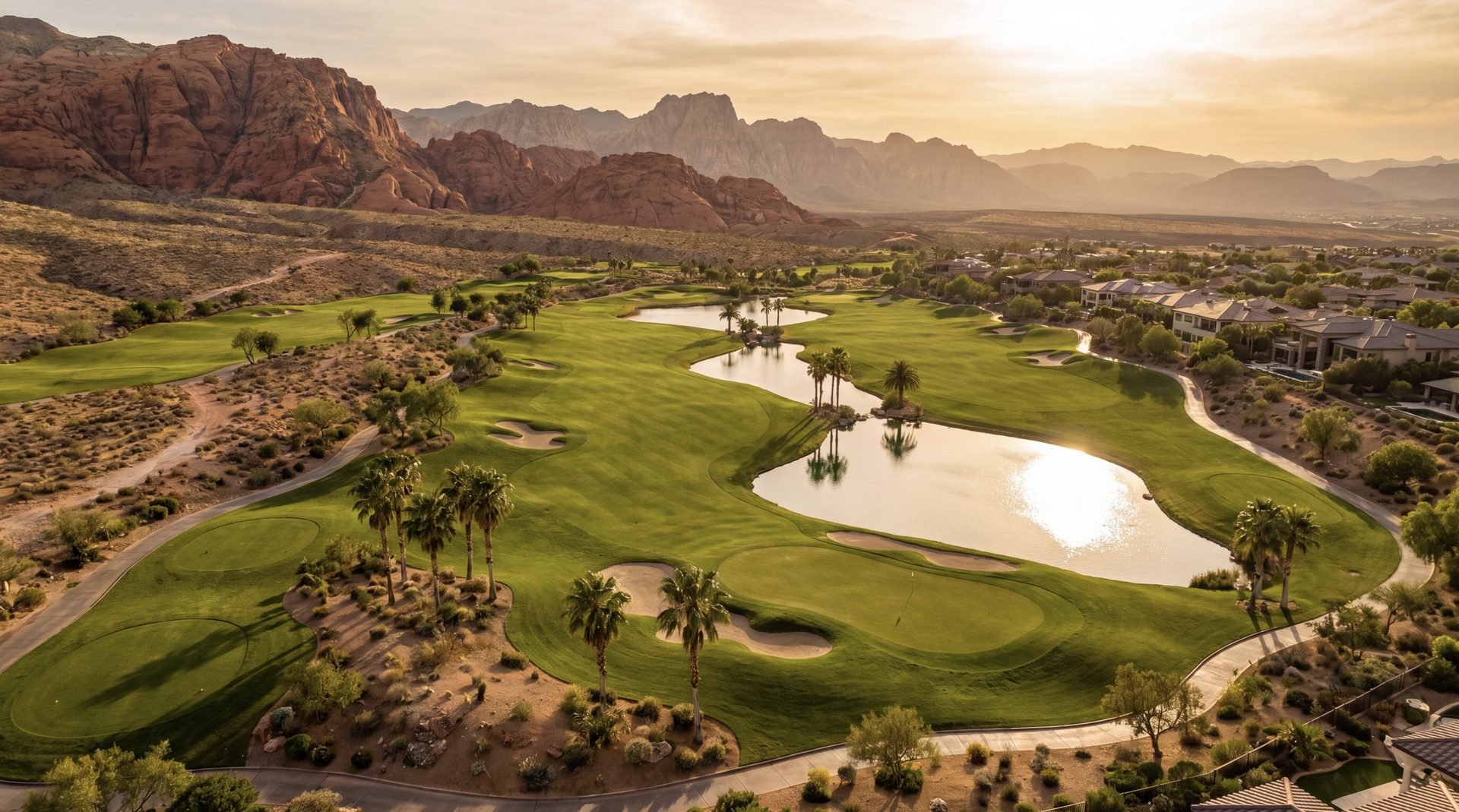
The best time to golf in Summerlin depends on your heat tolerance, your tee-time flexibility, and whether you are chasing perfect turf or perfect conditions. Summerlin's golf corridor — home to courses like TPC Las Vegas, Siena Golf Club, Angel Park Golf Club, and the public layouts of Palm Valley, Highland Falls, and Eagle Crest — sits at an elevation meaningfully higher than the Las Vegas Strip, which gives it a slight but real edge in comfort during the hotter months. Even so, the Mojave Desert sets the terms, and smart golfers plan around them.
Fall: the season serious golfers wait for
October through November is widely regarded as the peak window for Summerlin golf. Daytime temperatures drop into a range that makes walking eighteen holes a pleasure rather than a test of endurance. Morning tee times are no longer a survival tactic — midday rounds become genuinely comfortable. The fairways are typically in excellent shape heading into overseeding season, and the surrounding landscape hits its most photogenic stretch, with the Spring Mountains providing a dramatic backdrop.
Fall also brings some of the region's best rate environments. With summer crowds thinning and winter snowbirds not yet fully arrived, tee time availability across the Summerlin corridor tends to open up. If you are planning a golf trip and can only pick one season, fall is the answer for most players.
Winter: overseeding, ryegrass, and mild mornings
Summerlin's winters are mild by any national standard, but they shape the golfing experience in one important way: overseeding. Most courses in the area overseed their Bermuda greens and fairways with perennial ryegrass each fall, typically in October or November. During the transition period — which usually lasts two to four weeks depending on conditions — courses restrict play on portions of the course to allow new grass to establish. Greens may be slower, fairways firmer, and some cart path rules apply.
Once overseeding is complete, Summerlin courses offer some of the lushest winter turf in the Mojave. Ryegrass holds its color and density through the cooler months, making January and February rounds visually striking even when temperatures dip. Morning rounds in the coolest winter weeks can require a light layer; by midday, conditions are typically ideal. Consult individual courses — including TPC Summerlin and Red Rock Country Club — about their specific overseeding schedules, as dates vary year to year.

Spring: the shoulder season everyone underestimates
March through May is an underrated window that many non-local golfers miss. Temperatures climb gradually through spring, but the most dangerous heat typically stays on the far side of Memorial Day. Conditions are comfortable from early morning well into the afternoon for most of this period. Turf transitions from winter ryegrass back to Bermuda as temperatures warm, so late-spring rounds may coincide with another short transition window — check course conditions before booking.
Spring also benefits from strong shoulder-season rates and fewer crowds than the peak fall window. If you are flexible on travel timing, late March through April offers an excellent combination of comfortable conditions, good turf, and reasonable pricing.
Summer: manage the heat or choose twilight
Summer in Summerlin is honest desert heat. June through early September brings daytime temperatures that make midday golf impractical for most players. This is not a reason to skip the season entirely — it is a reason to adjust your strategy.
Early morning tee times are the primary tool. Sunrise rounds, particularly in June when the days are longest, allow players to complete 18 holes before the worst heat arrives. Many courses on the Summerlin corridor open as early as conditions allow and often see their tee sheet fill from the front before midday. Booking early — sometimes a week or more ahead — is advisable during summer months.
Twilight golf is the other summer option, and it has become a legitimate draw in its own right. As afternoon temperatures begin to ease in the final hours before sunset, rates at most Summerlin courses drop substantially for twilight tee times. Playing into the evening with the Spring Mountains catching the last light, you often get fewer than 18 holes but a round that costs a fraction of the morning rate. Courses like Bear's Best Las Vegas and the Golf Summerlin properties offer twilight access worth checking in warmer months.
The elevation above the Strip gives Summerlin courses a consistent edge in summer comfort — but the desert still sets the terms. Plan around it, not against it.
The elevation factor
Summerlin sits noticeably higher than central Las Vegas. The communities along the western rim of the valley, from the Sun City Summerlin area in the north down through the Tournament Hills and Red Rock corridors, gain meaningful elevation as they approach the Spring Mountains. This translates to air that is marginally cooler and thinner than on the valley floor — a combination that makes conditions more comfortable in summer and can also affect ball flight. Golfers who play frequently at sea level or lower elevations often note that shots carry slightly farther in the thinner desert air. The effect is real but modest; most players adjust within a round or two.
Use our Summerlin golf course map to orient yourself to the geography of the corridor and identify which courses sit at the highest elevations on the western edge.
Practical planning tips
Regardless of season, a few habits apply across the year. Bring more water than you think you need — Summerlin's low humidity means you lose moisture without always feeling it. Sunscreen matters in every season, not just summer; the high desert sun is intense year-round. If you are traveling from a humid climate, give yourself a round to acclimate to the dry air before judging your swing.
For the most complete view of what each course offers across seasons, browse the full Summerlin golf courses guide and read individual course profiles before booking. Las Vegas National, located slightly off the western corridor, plays to different conditions than the Summerlin courses; see the Las Vegas National Golf Club profile for details on that layout's seasonal character.
Whatever the season, Summerlin's golf corridor rewards those who plan thoughtfully. The conditions are predictable once you understand the desert's rhythms — and that predictability is part of what keeps golfers coming back.